
Searching Fayette County Criminal Dockets
Fayette County criminal dockets live in two separate systems. The court named on your notice decides where to look. Fayette County Common Pleas CaseLook handles felony matters in Common Pleas, using the CR filter. Washington Court House Municipal CaseLook covers municipal criminal cases under CRA and CRB. A blank result in one portal tells you nothing about the other. At Common Pleas, type the last name first. Then a space, then a first or middle name. The case-number field takes numbers only, up to 12 characters, and the guidance says to search one criterion at a time. The municipal portal shows a “Last, First” example. Its number field allows up to 16 characters. Write down the court, the identifier, and the date you searched. When wording or current status matters, ask the right Fayette County clerk for the docket entry or a certified copy.
- Read the notice or citation and identify the Fayette County court named there.
- Use Common Pleas CaseLook for a CR matter or Municipal CaseLook for a CRA or CRB matter.
- Begin with the portal’s name or numeric case-number format, rather than combining several fields.
- Use a calendar view only to check a listed public setting, then read the dated docket entries in order.
- Contact the court clerk for verification, an ordinary copy, or a certified document when needed.
Note: Treat any search result as a starting point. If information conflicts, the clerk’s record and a court-issued notice control.
Fayette County Felony and Misdemeanor Docket Paths
Court level shapes the route. At Common Pleas, the public CaseLook route covers felony matters filed under the CR category. Municipal Court holds misdemeanor jurisdiction. It can also handle the early steps that come before a felony case moves to Common Pleas. So one Fayette County matter can leave records in two courts. Check each one in turn. Do not expect a single case number to follow the matter across both systems.
| Fayette County route | Public search starting point | Important limit |
|---|---|---|
| Common Pleas criminal | CaseLook CR filter | Portal information can lag after a filing or action. |
| Municipal criminal | Municipal CaseLook CRA/CRB filters | A municipal proceeding may not use the same number as a later Common Pleas case. |
| New Holland Mayor’s Court | Mayor’s Court clerk and citation instructions | No public online docket search was located. |
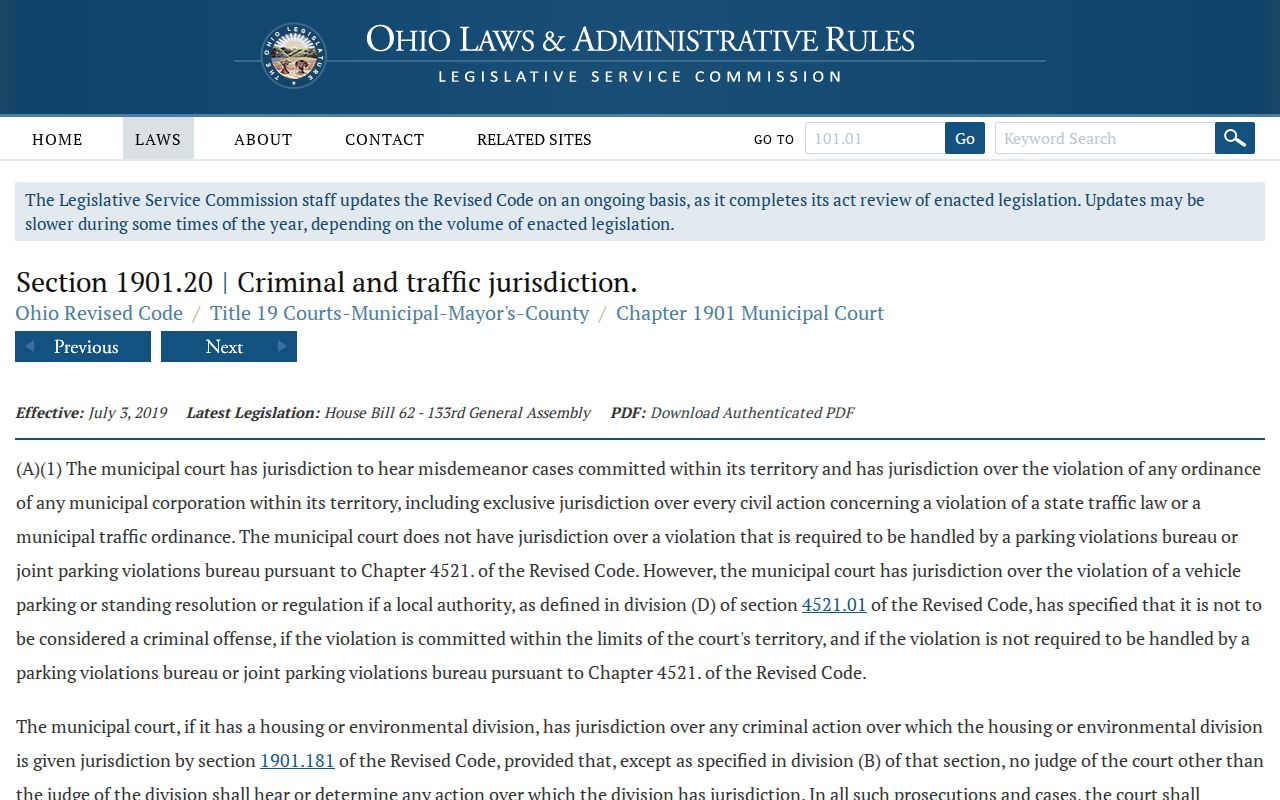
Which court hears a Fayette County criminal docket depends on the charge. The R.C. 1901.20 text spells out the Municipal Court's criminal jurisdiction. Treat it as a search aid, not a ruling on where any particular charge belongs.
Let the court listed on the notice lead any Fayette County criminal docket search.
Inside a Fayette County Criminal Docket
A criminal docket is a timeline, not a verdict. You may see a complaint or indictment, notices, motions, an arraignment, a pretrial, a court-trial setting, an order, and a judgment. Each appears in order of filing. Dates matter. An entry only makes sense next to the entries around it. A hearing date means an appearance is listed. It says nothing about the result. Common Pleas CR marks a criminal matter in that portal. CRA and CRB mark municipal criminal cases. There is no confirmed public pattern of a CR prefix in case numbers here. The safe approach is the portal’s numeric field itself, not an invented format like 2026-CR-00001. Keep the punctuation exactly as printed on your paper notice when you talk to the clerk. Follow the numbers-only rule online.
| Case number | The court-assigned identifier used to locate the Fayette County matter; each portal has its own numeric-entry rule. |
|---|---|
| Case type | Common Pleas CR or Municipal CRA/CRB directs the searcher to a local interface grouping. |
| Docket event | A logged filing, notice, order, hearing, or other recorded court action. |
| Hearing date | A listed appearance or setting, not necessarily a judgment or final disposition. |
| Judgment or order | A court entry read with its date and the rest of the docket; a certified copy comes from the clerk. |
Fayette Criminal Docket Code Filters
The public portals use short codes to sort cases, not to define them. CR filters Common Pleas criminal matters. CRA and CRB filter municipal criminal matters. Traffic cases sit under TRC and TRD instead. Keeping these labels straight keeps a Fayette County criminal docket search from pulling in unrelated traffic or civil results.
- Arraignment
- A criminal procedural setting. It is not a final result.
- Pretrial conference
- A setting to address the case before trial. Municipal calendars can also show a telephone pretrial.
- Motion
- A written request asking the court to act. A filed motion is not proof that it was granted.
- Disposition
- A later case outcome or resolving entry that should be confirmed in the dated record.
Calendar labels in Fayette County can also flag status, time, case, party, or description. Those headings organize a listed event. They are no substitute for the docket or an official copy of the entry.
How a Criminal Case Moves
A criminal case in Fayette County usually opens with a complaint or similar charging event. It then moves through listed procedural stages. The public docket is the best tool for putting those stages in order. A later entry often refers back to an earlier hearing or filing. A municipal initial proceeding may show up before the separate Common Pleas felony record begins. For what is current, trust the court and the clerk over any portal label alone.
Docket flow: Filing → Arraignment → Pretrial → Plea or Trial → Disposition → Sentencing
One entry rarely settles a case. A bond or fine line, a plea form, an arraignment listing, a warrant reference, or a payment-plan form does not by itself establish a conviction. Nor does it settle the final outcome. Fayette County Municipal Court does publish forms. But having a form online does not mean every matter can be resolved without showing up. Check the notice, the current calendar, and the clerk for live status.
Fayette Criminal Docket Delay and Verification
Timing matters here. Common Pleas CaseLook warns of lag. Information can run 24 hours or longer behind a filing or judicial action. So if your notice shows a recent event that the portal does not, keep the court and case number, recheck later, and contact the Fayette County Clerk of Courts. An empty screen is not a final answer. The official Common Pleas court page identifies the court behind this record route and shows what that office publishes.
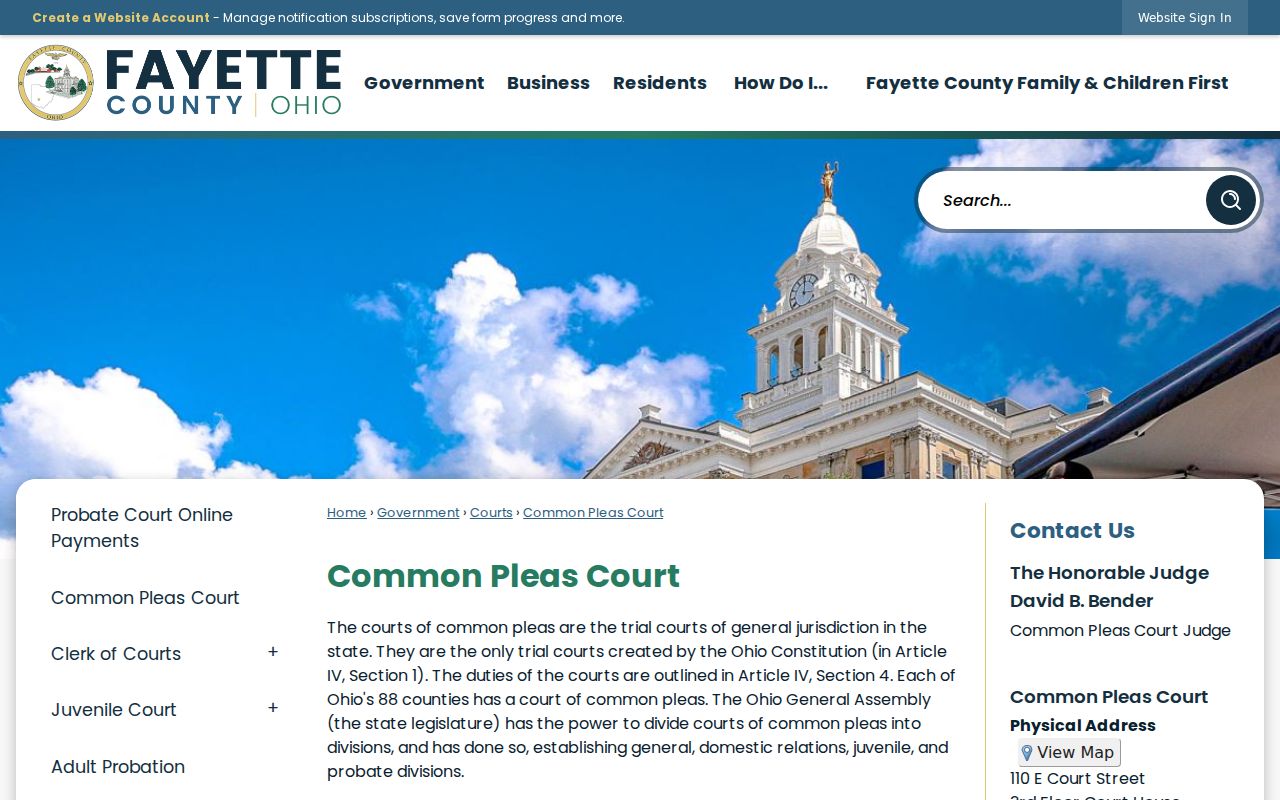
CaseLook and the clerk's office remain the practical routes for a current Fayette County criminal docket question. Court identification comes from the official page itself.
Quick answer: A recent Fayette County criminal docket entry may be absent from Common Pleas CaseLook during the stated delay. A clerk request or office contact is the verification step, not a second guess about the case.
Courts That Hold Criminal Dockets
Criminal dockets in Fayette County live in more than one office. The Fayette County Clerk of Courts keeps the Common Pleas general docket, including the qualifying criminal material that appears in CaseLook. Washington Court House Municipal Court runs its own shop. Its clerk maintains a separate Record Search tool, calendar, forms, fee page, and retention rules. Probate and Juvenile sit at division-level offices. Juvenile access carries extra restrictions. So the county offers no single all-courts criminal search. Your first job is matching the case to the right court.
The Fayette County Clerk of Courts is the starting office for a Common Pleas docket or document request. Give the court, the case number if known, the caption if known, the entry or date range you need, and whether an ordinary or certified copy is wanted. Municipal requests belong with the Municipal Court clerk instead. A county administrative public-records form is no substitute for a court-specific request.
Fees differ by court. Common Pleas lists copies at $0.25 per page. Certification runs $1 per document on its posted 2023 schedule. The Municipal Court's December 2024 fees set $0.15 per photocopy page, $10 per certified document, and $20 for audio. Confirm the current amount and delivery method with the office before paying. Those two fee lists come from separate dated sources. Treat them as court-specific, not one countywide schedule.
Older Fayette County Criminal Dockets
Older dockets need more than a portal result. For pre-2001 Common Pleas research, the County points to a historic Kofile/AppXtender route, and the Records & Archives Center describes older court holdings. Before assuming a historical file is available, ask about its record series, date range, and access rule. That call saves a wasted trip.
On the Municipal side, local rules retain civil, traffic, and criminal files for 50 years. Storage rules still apply. Retention does not promise an online image or a remotely available document. It explains the next step, though. When CaseLook cannot answer an older-record question, the Municipal Court clerk is the Fayette County criminal docket contact.
Sealed Dockets and Public Access
Ohio's Rules of Superintendence, Rules 44 through 47, begin with a presumption of public access to court records. Exceptions, redaction, and restrictions still exist. Fayette County access varies by court, case stage, document, and medium. A missing portal entry can mean many things. It might be a delay, the wrong court, a legacy record, a Mayor's Court matter, a seal, or another lawful limit. It never justifies guessing about protected information.
Common Pleas access follows the general-docket statute and the personal-identifier rule. Sealing and juvenile statutes add their own limits. Some Municipal reports are excluded from viewing or copying. A criminal or civil complaint is not released before service. Ask the Fayette County clerk whether a public docket entry exists, what rule or order controls any limit, and what review process is available.
Access rules: Ohio Sup.R. 44-47 defines court-record terms and public-access procedures. R.C. 2303.12 addresses Common Pleas general dockets and qualifying electronic access. R.C. 2303.901 requires personal identifiers to be omitted. R.C. 2953.32 supplies a qualifying criminal sealing path, while R.C. 2151.356 addresses juvenile sealing.
The Ohio sealing statute governs sealing a criminal record.
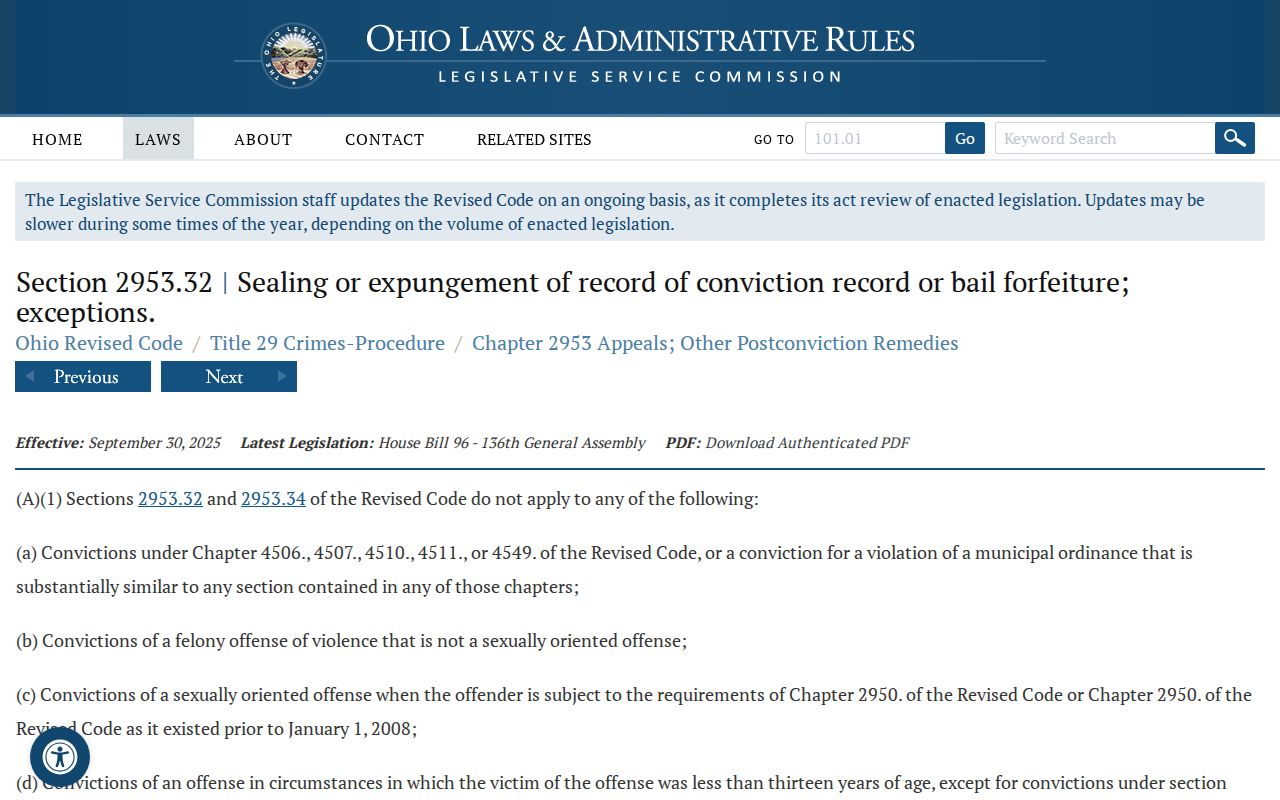
It lays out a legal pathway. Nothing in it lets you infer why a particular Fayette County search result is missing.
Fayette County Mayor’s Court Docket Exception
Check New Holland before using Municipal CaseLook. This Fayette County Mayor's Court maintains its own docket. The village publishes clerk contact, a court schedule, and citation information. It posts no online docket-search interface. Route a New Holland citation by the charging court and location shown on the paper. Location matters too. Do not assume every Fayette County criminal matter lands in Washington Court House Municipal CaseLook. The New Holland Mayor's Court page is the official local starting point when that court is named. Its court clerk can provide the proper record channel and access instructions.