
Searching Fayette County Civil Dockets
Court choice comes before anything else. For Common Pleas CV cases, the public starting point is Common Pleas CaseLook. That portal also carries DR, JL, CA, and MI filters. Washington Court House Municipal CaseLook is a separate system run by a separate clerk. It offers civil CVE, CVF, CVG, CVH, and CVT filters plus CVI for small claims. Neither replaces the other.
Search the two portals differently. Common Pleas wants one criterion at a time. A name or company search follows the local last-name, space, first-or-middle-name pattern, while a case number is numbers only with a 12-character maximum. Municipal CaseLook shows a "Last, First" example. It takes a 16-character numeric number and adds filters for party or company name, file date, hearing date, and type. If a notice or record names a court, search that one. Then save the case number and the date you searched. A later Fayette County clerk request goes smoothly with both.
- Identify whether the Fayette County matter belongs in Common Pleas, Municipal Court, or a separate division.
- Choose the matching CaseLook portal and its civil or small-claims filter.
- Search with the portal’s local name format or numbers-only case-number field.
- Read the dated docket entries and use a calendar search only to confirm a listed public setting.
- Ask the correct clerk for a specific public document, docket print, or certified copy when verification is needed.
Note: An empty result does not mean no case exists. The wrong court, a field format mismatch, an indexing delay, restricted access, or an older record series can all return nothing.
Fayette County Common Pleas Civil Docket Routes
The CV filter in Common Pleas CaseLook is the place to begin a Fayette County Common Pleas civil docket search. That same screen also routes searches through DR for domestic relations, JL for judgment liens, CA for appeals, and MI for miscellaneous matters. Treat these labels as routing tools and nothing more. They say nothing about every document in a case. They do not fix the legal nature of a claim. Keep Probate and Juvenile separate as well. Those Fayette County offices run their own public contacts and access rules.
| Fayette County category | CaseLook starting filter | Search caution |
|---|---|---|
| General civil | CV | Use the case number when available, or search one name criterion at a time. |
| Domestic relations | DR | Some records or fields can be limited by rule or order. |
| Judgment lien, appeal, or miscellaneous | JL, CA, or MI | The code is an interface grouping, not a complete document description. |
For the official source on Common Pleas original civil jurisdiction where no exclusive grant sits with a lower court, see R.C. 2305.01. The Ohio Revised Code section states the scope in full.
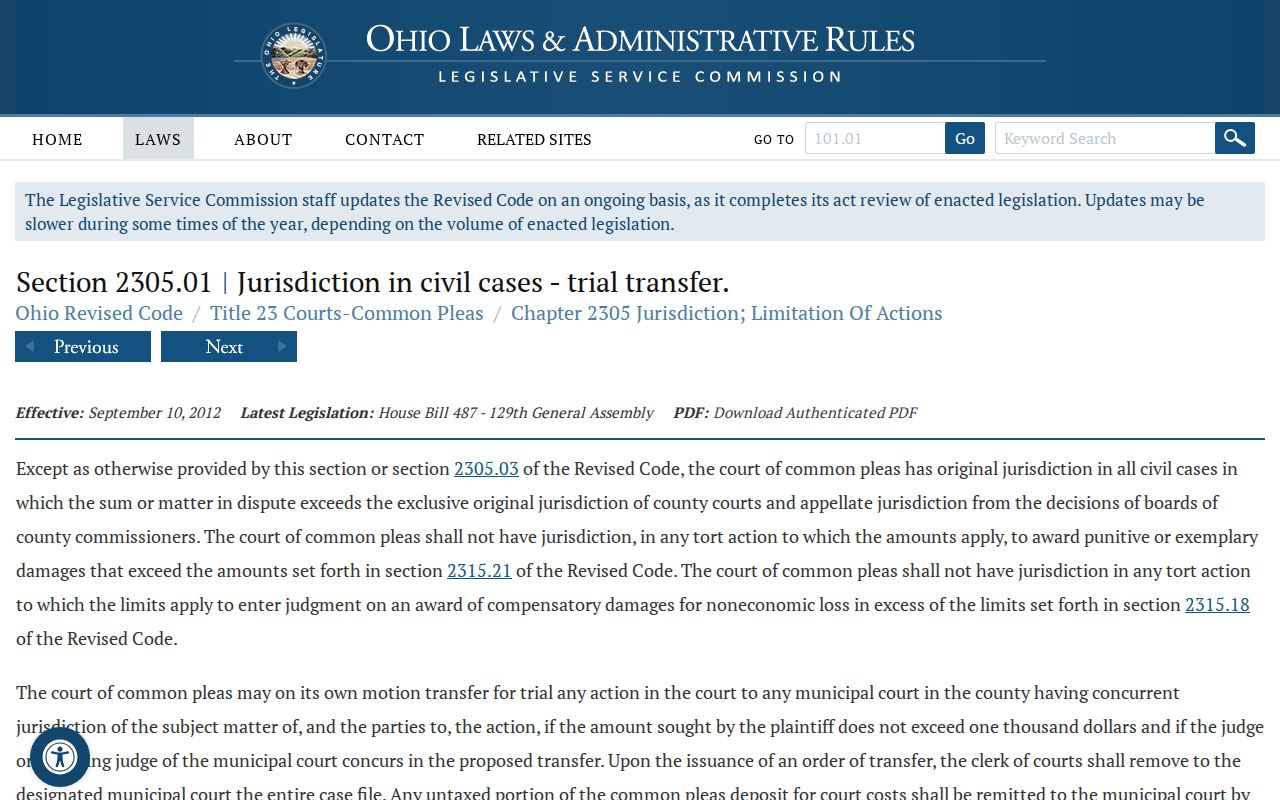
A statute gives background only. For routing a specific Fayette County civil docket, the court and clerk remain the working sources.
Inside a Fayette County Civil Docket
Think of a Fayette County civil docket as a time-ordered register of case activity. A complaint, service filings, motions, memoranda, responses, notices, orders, listed hearings, and a judgment can all appear there. An entry proves an event was recorded, but the underlying document may not open online. Dates carry the meaning. An early filing can explain a later setting. A later order can change what an earlier entry meant, so read them in order.
The portals are search tools, not a promise of remote access to pleadings, attachments, exhibits, audio, or every order. When exact wording matters, request the identified public item from the Fayette County clerk. Say whether an ordinary or certified copy is needed.
| Case number | The court-assigned identifier. Common Pleas and Municipal CaseLook use separate numeric-entry limits. |
|---|---|
| Case type | A local portal filter such as CV, DR, CVE, or CVI that helps select a search route. |
| Filing or motion | A recorded document or request; its presence does not establish that the court granted it. |
| Setting | A listed hearing or court event, which can change and is not a final result. |
| Order or judgment | A court entry that should be confirmed with its date and, when needed, a clerk copy. |
Fayette County Civil Docket Portal Filters
Fayette County's two CaseLook systems differ in what they let you filter. Common Pleas offers name or company, hearing date, numeric case number, type, result size, and a CAPTCHA. Its calendar search takes beginning and ending dates. It adds the CA, CV, CR, DR, JL, and MI choices. Municipal CaseLook adds a file date filter. A Civil or Small Claims option is there too. In any Fayette County civil docket search, pick the date that answers your question. A file date is not a hearing date.
- File date
- The date a case or document was entered or filed. It is not necessarily a hearing date.
- Hearing date
- A listed appearance or setting. It is not a final judgment.
- Case type
- A portal classification used to narrow results and choose the correct local system.
- Calendar search
- A date-range or schedule tool for listed public settings, not a transcript of every case action.
Each portal handles failed searches its own way. Municipal CaseLook tells users to loosen criteria; Common Pleas says use one criterion at a time. Follow the local instruction, and bring court procedure questions to the Fayette County clerk rather than asking for an interpretation of the case.
Civil Case Types on the Docket
Court level and portal category drive where a Fayette County civil docket search lands. Common Pleas CaseLook groups civil matters under CV. DR, JL, CA, and MI filters sit alongside. Municipal CaseLook keeps its Civil filters apart from CVI small claims. The categories sharpen a search. Still, a code by itself will not tell you the full claim, the relief sought, or which documents are public. For that, read the dated docket and ask the clerk for the identified public record.
| Fayette County civil group | Public route | What the code does |
|---|---|---|
| Common Pleas civil | Common Pleas CaseLook CV | Starts a search for the court’s general civil category. |
| Domestic, liens, appeals, miscellaneous | Common Pleas DR, JL, CA, MI | Provides a distinct interface filter, subject to access limits. |
| Municipal civil | Municipal CaseLook CVE, CVF, CVG, CVH, CVT | Separates municipal civil results from other municipal case types. |
| Small claims | Municipal CaseLook CVI | Starts the municipal small-claims search route. |
R.C. 1925.02 is the official source for the statutory small-claims jurisdiction reference.
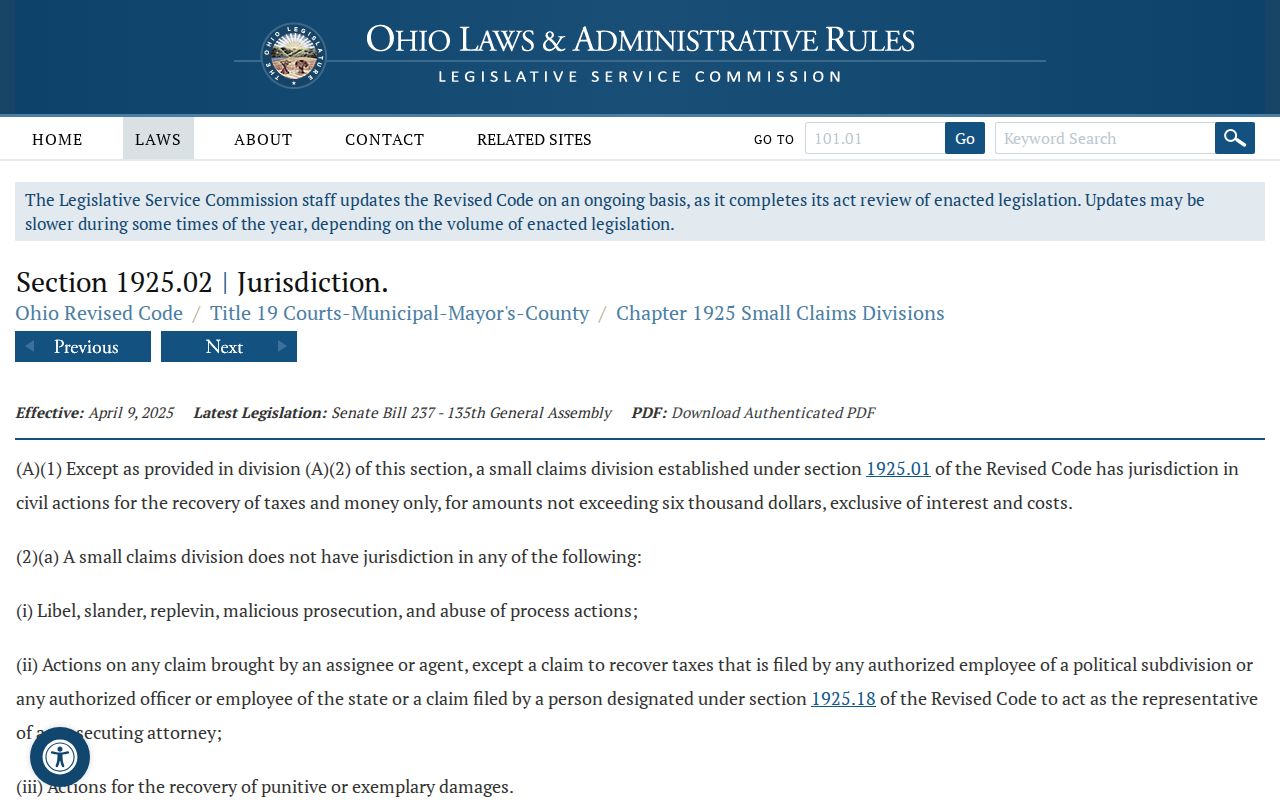
Small-claims routing starts with the Municipal Court's CVI filter. The court record and any access limit stay case specific.
Fayette County Municipal Civil Docket Limits
Ohio law generally caps municipal civil jurisdiction at $15,000. Small claims are capped at $6,000. Those figures explain why Fayette County offers both a Municipal Court civil route and a Common Pleas civil route. Treat them as search context. They are not a ruling on where a given case belongs. Jurisdiction can turn technical fast. The court named on the case papers is the sound first reference. The municipal civil-jurisdiction figure comes from R.C. 1901.17, which states the official rule.
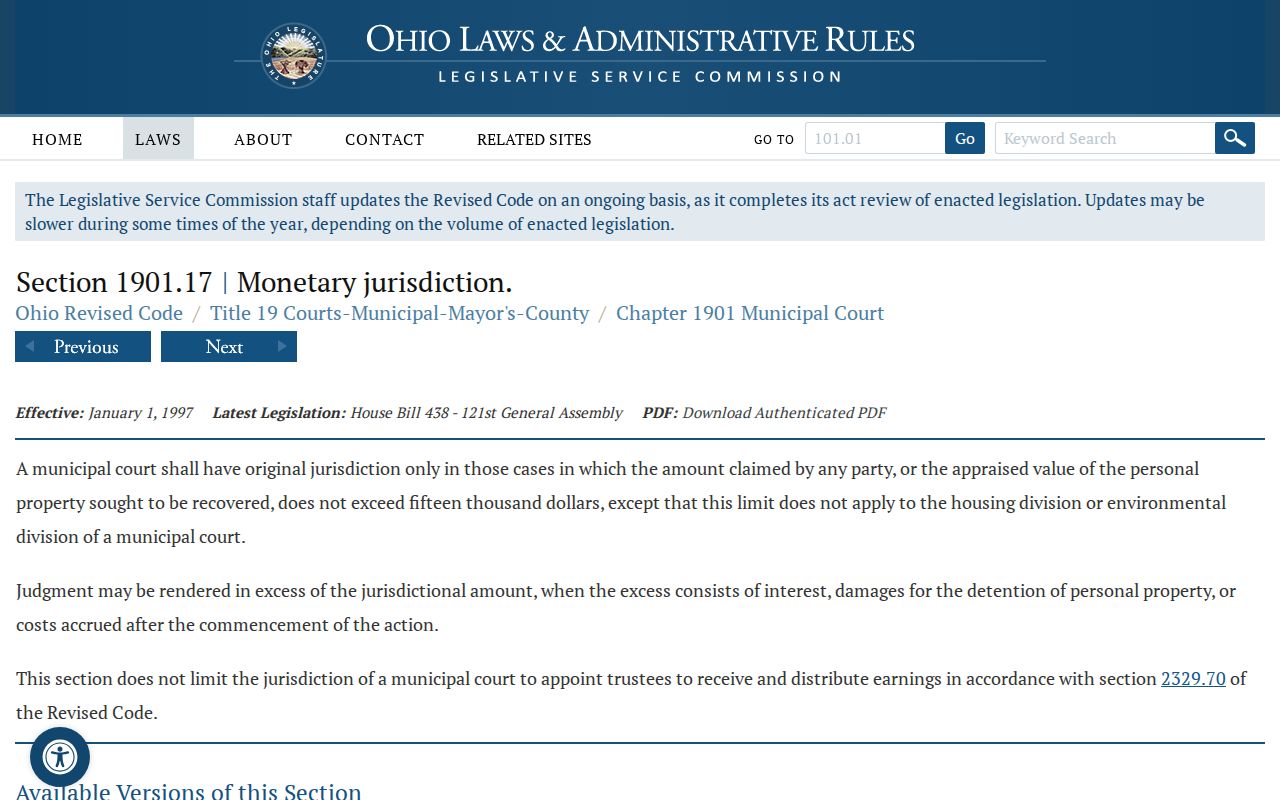
The statutory limit helps you tell the local search channels apart. For an individual docket, a Fayette County case number and court caption do the practical work.
Civil Docket Settings and Hearings
Fayette County splits its civil calendar between two systems. Common Pleas runs a Calendar Search. You set a beginning date, an optional ending date, a type, a result size, and a CAPTCHA. Municipal Court takes a different approach. Its month calendar and schedule view let you narrow by date range, attorney, or official. Plain headings cover time, case, party, description, and status. Either tool can help you spot a listed public event. Still, the court notice and the clerk decide what governs if a display disagrees.
Do not lean on one screen too hard. Common Pleas warns that CaseLook data may lag by at least 24 hours. Municipal Court's public schedule, along with its newer local rules, does not spell out regular arraignment detail the same way. A Fayette County civil docket setting is never a judgment. A blank view can mean a filter, a restriction, an incomplete record, or dates outside your range. So treat any live setting as something to verify. Before acting on a civil hearing display, compare it with the court notice. Then ask the clerk whether the setting still stands.
Fayette County Civil Motion Entries
A motion filed in a Fayette County civil docket is a request, not a grant. That distinction matters. Common Pleas local rules cover written motions, responses, and continuances. But filing alone does not create an oral hearing or move a setting through agreement alone. Watch the docket afterward. It may add a memorandum, a response, an order, or a new setting. The full date sequence tells you more than any single title.
Municipal Court posts a continuance form with a civil entry. It teaches the same lesson. Asking for a new date is not the same as having one. A status conference, a court trial, or any other listed setting is also not a ruling or a final result. If a court date affects a pending matter, check the live calendar. Ask the Fayette County clerk too.
Key point: A Fayette County civil docket shows that an event was entered. It does not turn a motion, form, or scheduled hearing into a court decision without the later order or judgment.
Civil Docket Access Rules
Ohio Sup.R. 44 through 47 builds the public-access framework for Fayette County court records. Rule 45 opens with a presumption of access. But it carves out exceptions, restriction procedures, and protection for personal identifiers. Common Pleas adds its own layers. R.C. 2303.12 governs the clerk's general docket and qualifying electronic access, subject to exclusions. R.C. 2303.901 requires personal identifiers to be left out of case documents.
Public access still has limits. A Fayette County civil document missing from a portal may be withheld under a rule or order. It may be shielded as a personal identifier, held until service, delayed in the search, filed in the wrong court, or simply sitting in historic storage. Ask the proper court a narrow procedural question: what is available, which rule or order controls, and what request path applies. Staff cannot reconstruct protected content. Do not ask.
Access rules: Ohio Sup.R. 44-47 provides the state court-record access framework. R.C. 2303.12 addresses the Common Pleas general docket and qualifying electronic access. R.C. 2303.901 governs personal identifiers in case documents.
Fayette County Civil Docket Copies and Historic Routes
Once a portal result points to the right Fayette County civil matter, request the exact public item from the court that holds it. The fees differ by court. Common Pleas posts a 2023 fee schedule. It lists $0.25 per page for copies and $1 per document for certification. Municipal Court's fee page, effective December 4, 2024, lists $0.15 per photocopy page, $10 per certified document, and $20 for audio. Say plainly whether you want the docket, a document, a certified copy, or audio. Confirm the current charge and how it will be delivered. For Municipal Court costs, Washington Court House Municipal Court's published fees show the figures that pair with this Fayette County civil docket image. The page separates Municipal Court records from Common Pleas records.
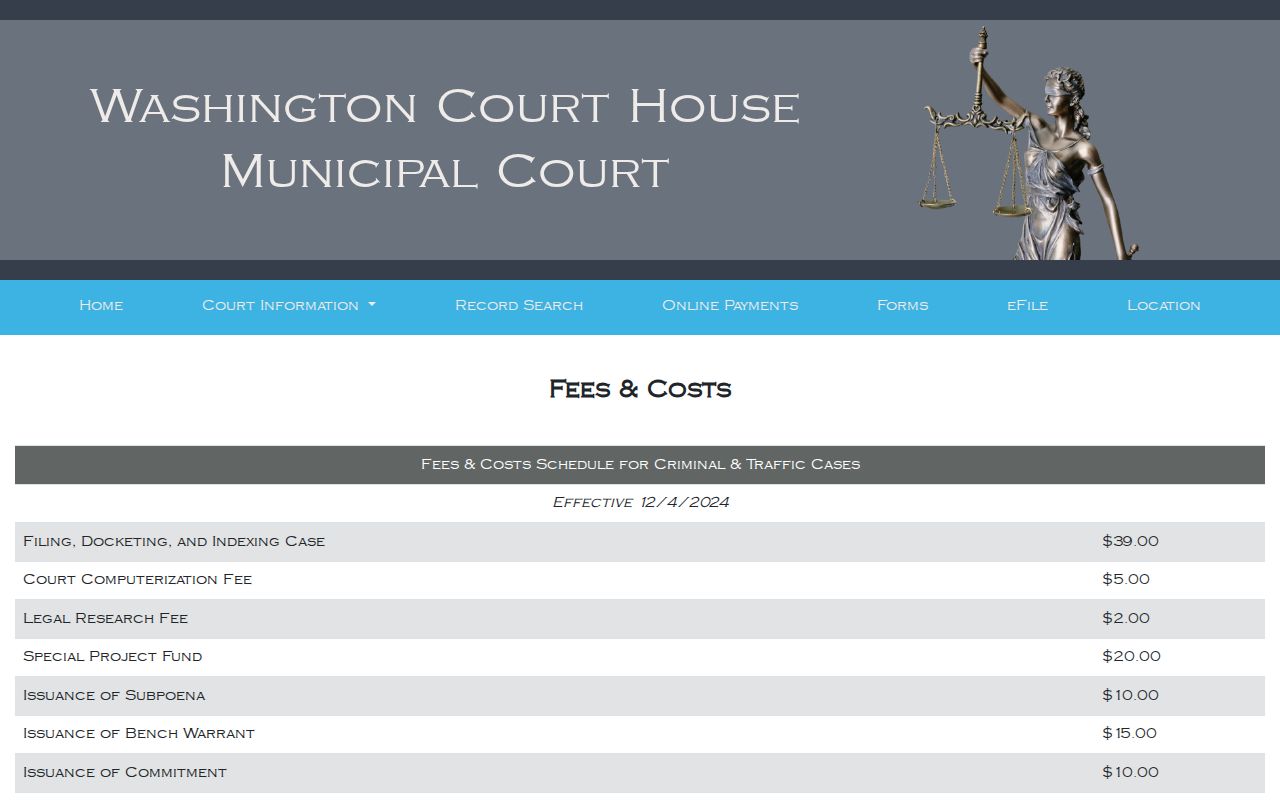
Costs differ between Municipal Court records and Common Pleas records. Check the fee schedule first, before you mail a request for copies from a Fayette County civil docket.
Older Common Pleas files take a different path. For anything before 2001, the county points researchers to the historic Kofile/AppXtender route. The Records & Archives Center describes its historic court holdings too. Neither route puts every old civil document online. So name the court, the record series, the date range, and the exact document you want.